
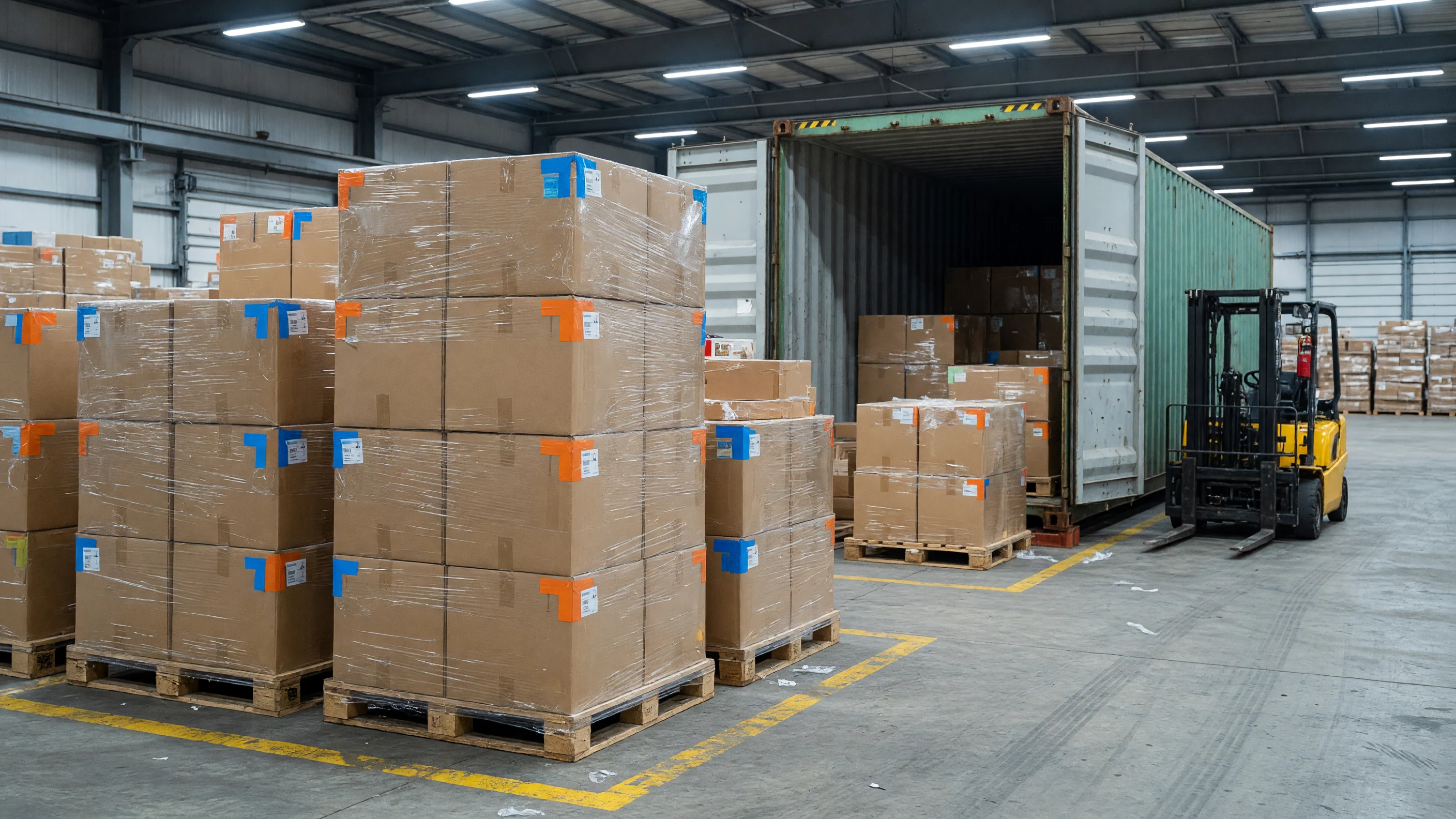
What changes when your espresso machine wholesale order isn't going to one warehouse in one country — and how to get the MOQ math, the voltage split, and the certifications right before the container leaves the factory.
Most espresso machine wholesale guidance stops at MOQ and FOB price — fine for a buyer placing one order for one market, but not for the buyer we hear from constantly: a hospitality equipment distributor filling one container across two regions, a hotel group standardizing across properties in different countries, or a commercial-kitchen supply company combining several client accounts to hit a factory's minimum. Combining destinations like that is normal, and usually the right call — it clears a per-model MOQ faster and spreads freight across more units. It also creates a problem a single-market order never faces: the same platform often ships in more than one voltage, certification, or plug type, all inside boxes that look identical from the outside.
I've spent close to 20 years on the manufacturing side of espresso machines — running coffee machine programs for a large Guangdong ODM group, then leading product development as an OEM espresso machine manufacturer at Hardshell in Foshan. This guide covers what an espresso machine wholesale order involves, what goes wrong when multiple markets share one shipment, and how to vet a supplier before you commit to a combined order.
The Basics of Espresso Machine Wholesale: MOQ, FOB, and Container Math
An espresso machine wholesale order starts with a model number and a quantity, not a catalogue price. Factories quote FOB per configuration — pump, boiler type, panel, housing material — because machines that look similar on a spec sheet can carry different costs in the bill of materials.
MOQs follow the same model-by-model logic: standard models commonly run a minimum around 1,000 units or one 20-foot container, larger or higher-value platforms can start from 200 units, and a 3-in-1 grinder-plus-milk-tank platform often starts around 500. If one model doesn't clear the threshold, most factories let you combine two model numbers into a single order — commonly at a modest price premium, often around 5%, for the flexibility.
Container-loading counts are the detail most price lists skip, and they matter for landed-cost planning before a quote comes back. On a compact platform, a 20-foot container commonly holds roughly 800–900 units and a 40-foot high-cube around 2,000–2,200; bulkier 3-in-1 or grinder-equipped platforms load fewer per container, often 550–800 and 1,300–1,800 respectively. Treat these as planning references, and confirm the exact count against the model you're quoting rather than a general "espresso machine" category — our guide to coffee machine wholesale MOQs and pricing covers the single-market version of this math in more depth than fits here.
For a multi-market buyer, though, the harder question isn't price — it's what happens once more than one destination shares that same container.
The Real Complexity: Combining Multiple Markets in One Wholesale Order
Combining destinations in one order is common and usually the right call. The complication: on most catalogue platforms, the housing, control panel, and carton artwork are identical between a 120V/60Hz build and a 220–240V/50–60Hz build. The only difference sits on a small printed spec line — exactly what gets missed under time pressure.
We saw this on a combined order for a hospitality-equipment wholesaler supplying two markets — 120V/60Hz units for North American retail accounts, 220–240V/50–60Hz units for a Gulf reseller. When the buyer's warehouse crew re-palletized the container for two bonded facilities, a handful of 220V cartons ended up on the U.S.-bound pallet. Nothing surfaced until an installer plugged one into a 120V outlet and the breaker tripped. No machine was damaged — the overheat/overpressure protection tolerated the mismatch — but it still cost a support ticket, a swap shipment, and an awkward explanation to two accounts.
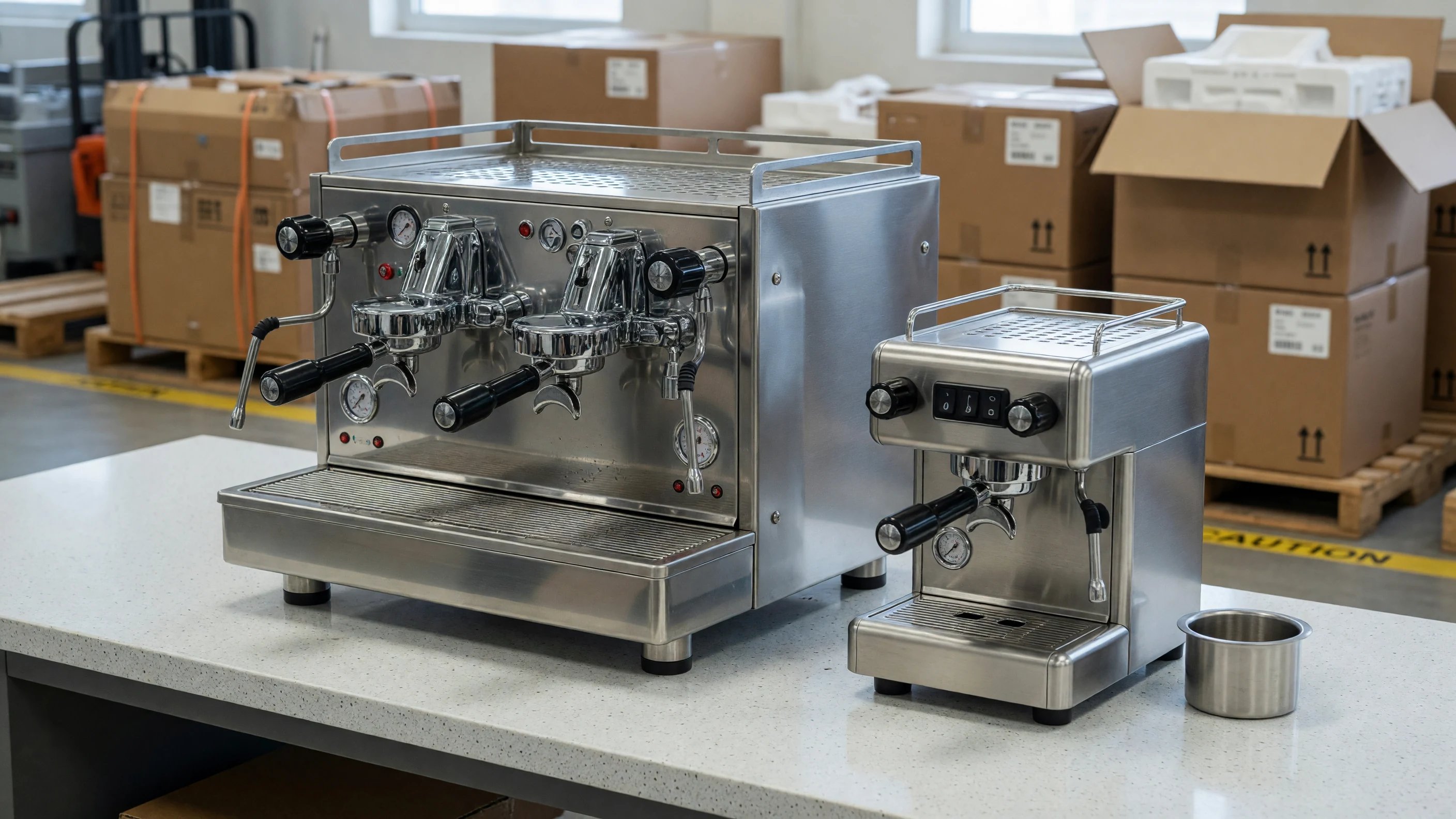
The root cause wasn't a manufacturing defect; it was treating the voltage variant as a spec-sheet detail rather than a warehouse-floor risk. The fix: every voltage or plug variant on a shared platform now carries a distinct color-coded corner label, on top of the batch and serial code tracing a unit to production line, date, and material lot. Combined-destination orders now also get a container loading manifest before departure, mapping carton color to pallet position.
Ask your wholesale espresso machine supplier two things before booking a combined-destination container: how they visually differentiate voltage or plug variants beyond a printed line, and whether they issue a loading manifest before departure. A specific answer to both usually means they've already been through this problem.
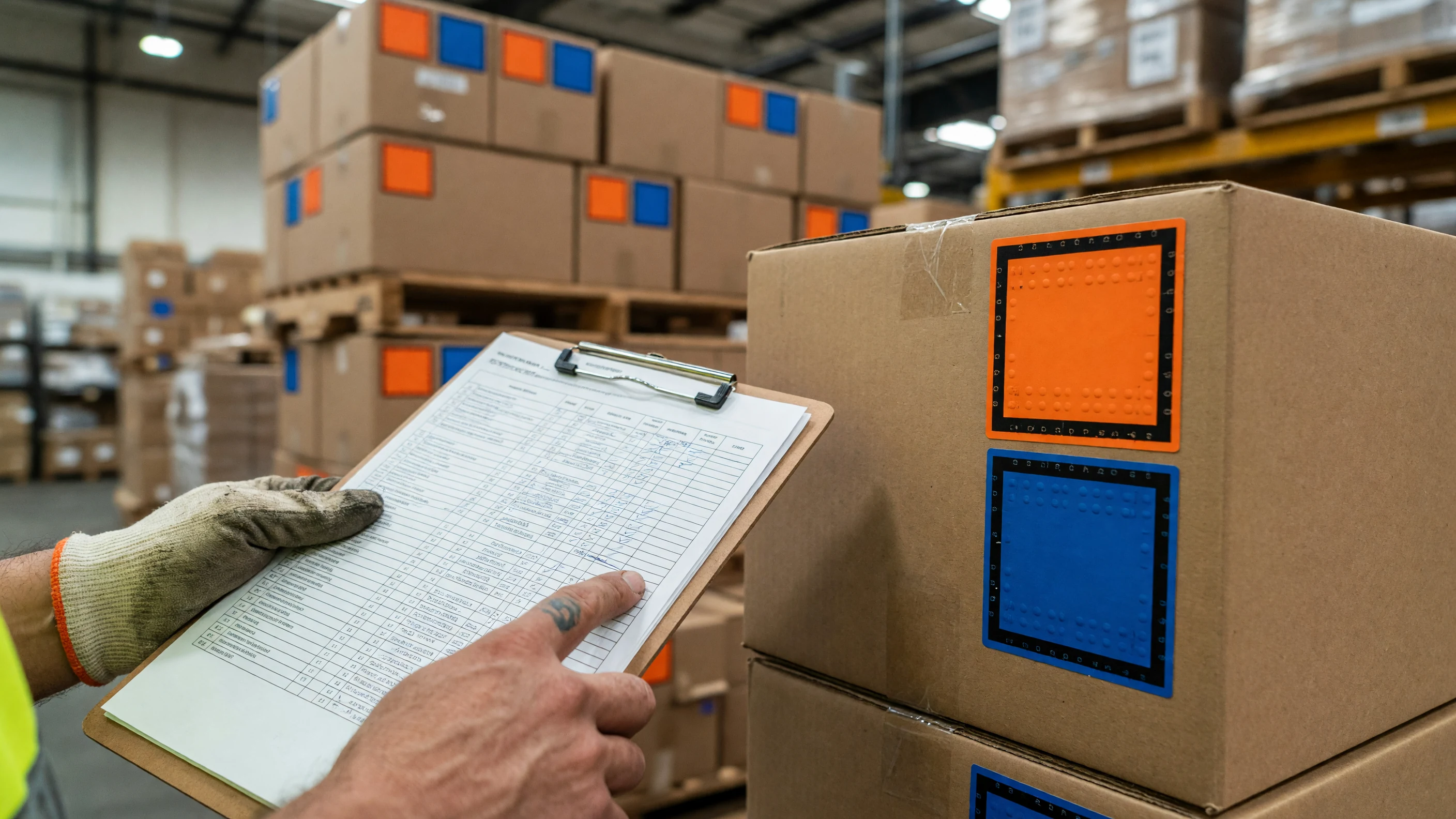
Certifying One Platform for Multiple Markets
Solving the carton-labeling problem gets a combined order onto the right trucks. It doesn't answer the bigger question: can one hardware platform legally sell in every market that order is headed to.
A hospitality-equipment wholesale group we worked with had been sourcing from two factories — one UL/ETL-compliant for North America, another CE-compliant for the EU and Gulf — and wanted to consolidate onto one supplier and platform for better combined-order pricing. The challenge was clearing both UL/ETL and CE without doubling tooling cost, since North America and the EU run different grid voltages. The build kept one housing and split only the PCB and wiring into two voltage-specific variants; core components (pump, boiler protection, PCB-level parts) were sourced to carry both UL and VDE/TUV marks rather than region-specific parts, with PCB clearance set to the stricter of the two standards. CE and ETL testing ran in parallel with tooling and pilot production instead of sequentially, since both routes already ran on other platforms in the factory.
The first combined order landed at roughly 1,200 units — close to 700 ETL-spec and 500 CE-spec off the same tool — in one 40-foot high-cube container, sorted by the same carton-label and manifest system above. Certification never added to the standard ~45-day production timeline because it ran alongside it, not after it. Landed cost per unit came down on both sides because tooling was shared across two markets instead of duplicated across two suppliers, and the buyer's next order has since folded in a third voltage variant onto the same platform.
The certification landscape a wholesale buyer needs to plan around varies by destination, worth mapping before you request quotes:
| Destination | Certification | What to watch for |
|---|---|---|
| European Union | CE (LVD + EMC), plus ErP and LFGB | Self-declaration route backed by lab test reports |
| North America | ETL or UL | Equal standing; ETL is usually faster and cheaper |
| United Kingdom | UKCA | Separate mark from CE, required for Great Britain |
| Russia / EAEU | EAC | Russian-language labeling; GOST list keeps expanding |
| Saudi Arabia | SABER (PCoC + SCoC) | Certificates can't be issued after goods reach port |
| UAE / GCC | MoIAT and the shared G-Mark | G-Mark covers low-voltage goods across 7 Gulf states |
Ask a prospective supplier which of these they already hold on the exact model you're quoting, versus which need to be newly applied for — that gap is what typically adds unplanned weeks to a launch timeline. Our certifications page documents which marks we hold directly and how we support market-specific requirements beyond that baseline.
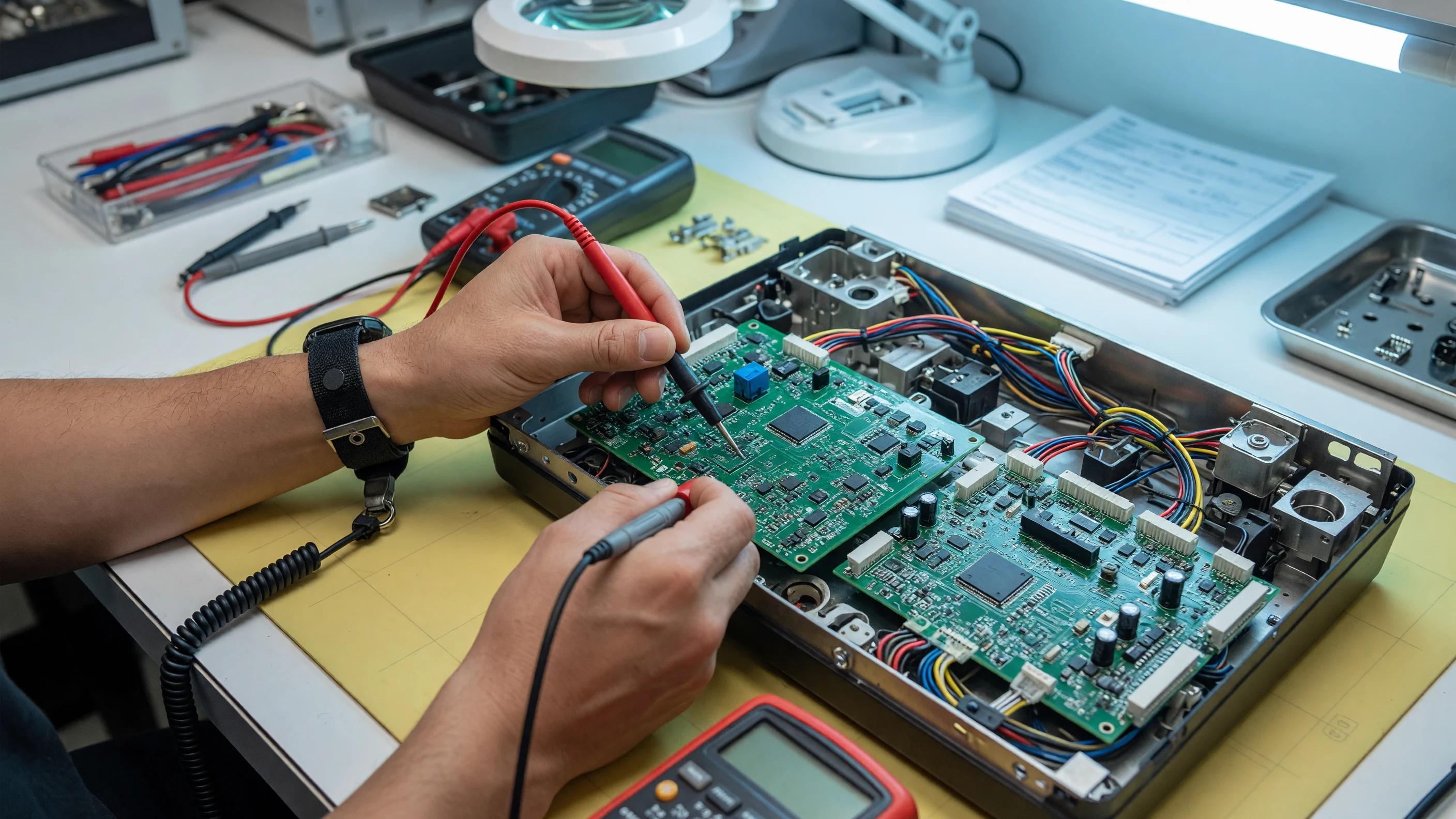
Matching Portafilter Tier to Your Wholesale Account Mix
Once the logistics and certification side of a combined order is settled, the remaining decision is which machine tier belongs in it. For buyers stocking a mix of hotel guest rooms, café counters, and F&B outlets, the 58mm-versus-51mm portafilter split is a real spec decision, not a cosmetic one.
A 58mm portafilter has a shallower basket and shorter extraction path than a 51mm unit, producing fuller extraction and better crema, but it demands tighter grind and tamp discipline and pairs with single-wall baskets running higher in-cup pressure — a fit for trained-operator accounts like a café-chain counter or hotel F&B outlet. A 51mm portafilter, with its deeper basket, forgives an inconsistent grind or tamp, which is why it tends to sit on guest-room and self-serve units operated by housekeeping or a hotel guest rather than a barista.
Raise this distinction with your supplier before finalizing which SKUs go into a mixed-account order, particularly on a commercial espresso machine wholesale order stocking both guest-room and F&B accounts. Our espresso machine lineup breaks the professional 58mm platforms and commercial dual-boiler class out by series for comparison.
What to Verify Before You Commit to a Combined Order
Treating a multi-market wholesale order as a platform decision from the start, not a series of one-off fixes, is the pattern worth copying from the case above. A few checks on the supplier's QC and after-sales side are worth confirming directly: core components (pump, boiler, valves, control board) under 100% incoming inspection rather than sampling; a batch and serial code on every unit traceable to a production date, line, and material lot, so one voltage variant's issue can be isolated without touching the rest of the shipment; and warranty terms in writing — a one-year limited warranty with free replacement parts, covered courier for on-site swaps, and a defect/return rate the factory commits to holding within 2–3%. Our five-stage quality control system documents how those inspection stages connect to that traceability.
If your next order is likely to add a third or fourth market, raise it with your OEM/ODM contact at the quoting stage — extending a shared platform to a new voltage variant is a far smaller ask than starting one from scratch.
FAQ
What is a typical MOQ for espresso machine wholesale orders?
Standard models commonly run a minimum around 1,000 units or one 20-foot container; larger platforms can start from around 200, and 3-in-1 platforms from around 500. Combining two model numbers is common when a single SKU doesn't clear the threshold, usually at a modest price premium.
Can one wholesale order combine different voltage or plug variants for different markets?
Yes, and it's common practice. The risk is logistical, not electrical — identical-looking cartons can get mixed up during re-palletizing — so ask your supplier for distinct carton labeling per variant and a loading manifest issued before the container ships.
What certifications does an espresso machine need for different wholesale destinations?
The EU requires CE; North America requires ETL or UL; the UK requires UKCA separately from CE; Russia and the EAEU require EAC with Russian-language labeling; Saudi Arabia requires SABER certificates issued before goods reach port; and GCC countries generally recognize the shared G-Mark.
How long does espresso machine wholesale production take?
Standard production commonly runs around 45 days after deposit for a mature platform. Certification for a new market doesn't add to that timeline if it runs alongside production rather than after it.
What's the difference between 58mm and 51mm portafilter machines for wholesale stocking?
58mm gives fuller extraction and better crema but demands tighter grind and tamp discipline, fitting trained-operator accounts like café chains or hotel F&B outlets. 51mm is more forgiving for less experienced users, which is why it suits guest-room or self-serve units.
Conclusion
Espresso machine wholesale buying for a single market mostly comes down to MOQ and FOB math. For a buyer combining markets in one order, it comes down to three more things: container math for landed-cost planning, treating voltage and certification consolidation as a deliberate platform decision instead of an afterthought, and matching portafilter tier to who actually operates the machine on each account.
If your next espresso machine wholesale order is likely to span more than one market or certification zone, talk to our team about a multi-market order before you request formal quotes — it's easier to build the platform right the first time than to retrofit it after a mix-up.