
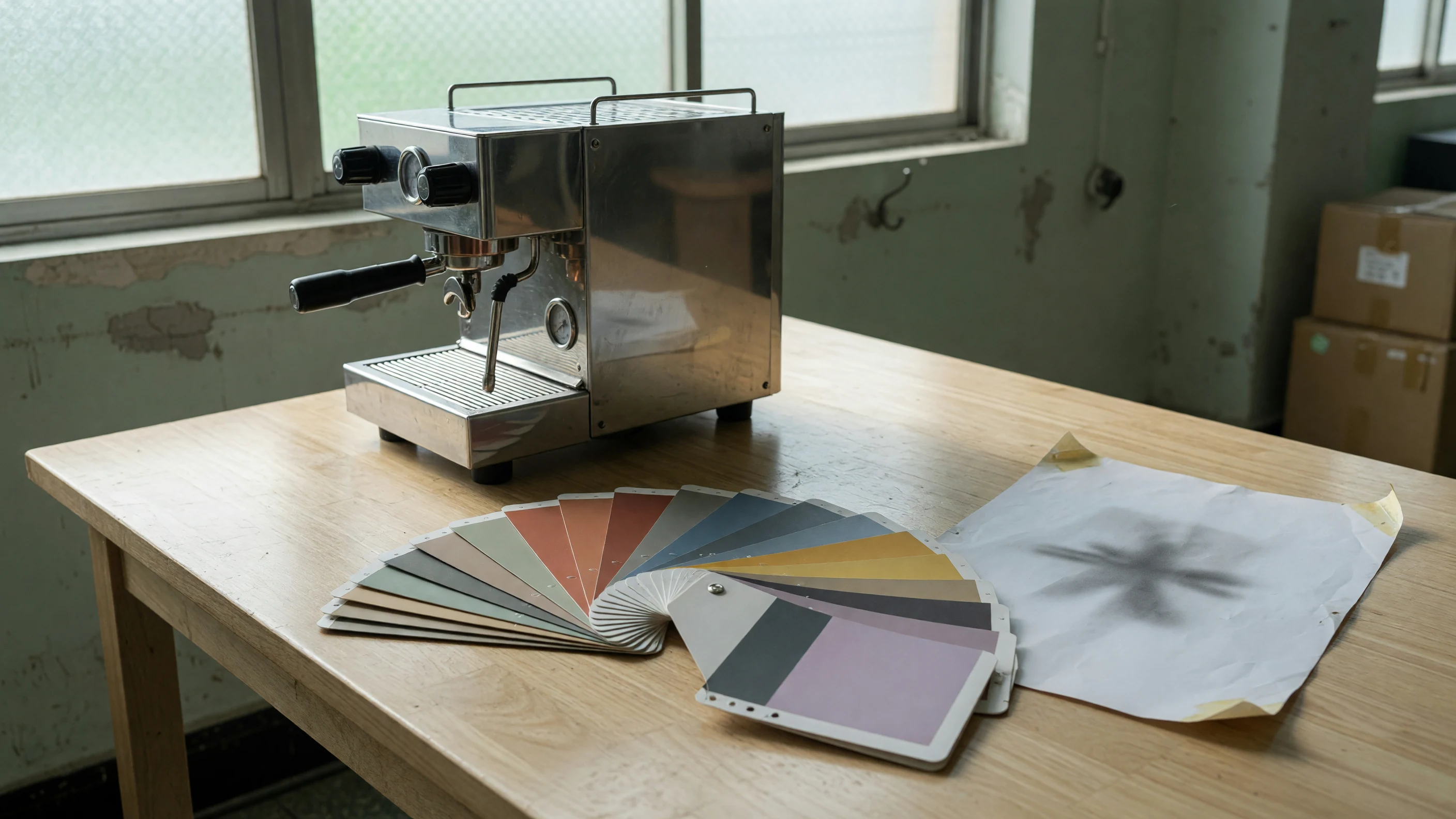
How to tell a one-week OEM coffee machine sample from a job that needs new steel, before anyone quotes a mould.
A photo and the sentence "build this under our brand" looks like a logo job. On the bench it often is not. The brew group in the picture is a different diameter from the platform that was priced, or a milk tank sits on a housing we do not tool, or the outer size is simply missing from the mould library. A catalogue machine with a logo can be sampled in about a week. A new housing cannot, and that gap is where OEM calendars get wasted.
An OEM coffee machine order is one of three jobs. Branding on a finished platform, and a panel-program change on that same tool, fit the one-week sample. A new silhouette, a move from a 51 mm group to 58 mm, or a milk tank added where the housing has no tank, is new steel. This piece is how to classify the job, what to send before a sample, and which requests we turn down.
I've spent more than 20 years on espresso-machine tooling and production, first inside a large Guangdong ODM group, now at Hardshell in Foshan. The buyers on these projects are brand owners, product managers, hospitality-equipment distributors, hotel fit-out contractors, kitchen-supply companies, and coffee-shop groups who want a machine under their own name. Most cups are still pulled at home. Offices come next. Guest rooms and small cafés are a smaller share. We build espresso platforms, not commercial batch-brew.
Three OEM Coffee Machine Jobs, and Only Two of Them Are Fast
Buyers use one word for three scopes of work. The sample promise only covers the first two.
| Job | What actually changes | Tooling | Sample, on our line |
|---|---|---|---|
| Branding | Logo, color, carton | Existing platform | About 1 week |
| Panel program | Button wording, water time, grinder dose | Same tool, PCB change | About 1 week |
| New steel | Outer shape, group diameter, milk tank, outer size | New or modified mould | About 1 month for a customized sample; a full reshape runs longer |
Branding is silk print, laser, a nameplate, or IMD, plus a color and a carton. The method depends on the housing. We run a silk-print line for that work. Color is sampled from a Pantone or a chip. A small color delta is normal, so plan about two rounds. Color customization on our quote is about USD 5 per machine. Custom cartons generally start at 1,000 cartons per design. Below that, the carton start-up is about RMB 1,000.
A panel-program change stays on the same tool. Button wording, water-out time, and grinder dose live in the program, not in a new mould. That is why it shares the one-week sample path with a logo job.
New steel is a different purchase. We do not tweak an old housing tool into a new silhouette. Moving a 51 mm group to 58 mm means new steel. Adding a milk-tank system means new steel. Changing the outer size means the product changes, which is why buyers rarely approve it once they see the calendar. A mould modification we have quoted sits around RMB 100,000–200,000 and about three months. A new tool set for a product is on the order of RMB 1 million. A full reshape — spec, design, mould, PCB, tool trial, pilot, then mass production — typically takes 3–6 months. If you pay the mould fee, that tool stays exclusive to you. If the tool cost is split, the tool can be shared, and that has to be agreed before anyone cuts steel.
We already hold several hundred tool sets. The correct first move is to match an existing platform. The week-by-week path from a confirmed sample through production and the five QC gates is a separate story, covered in how a custom espresso machine moves from sample to shipment.
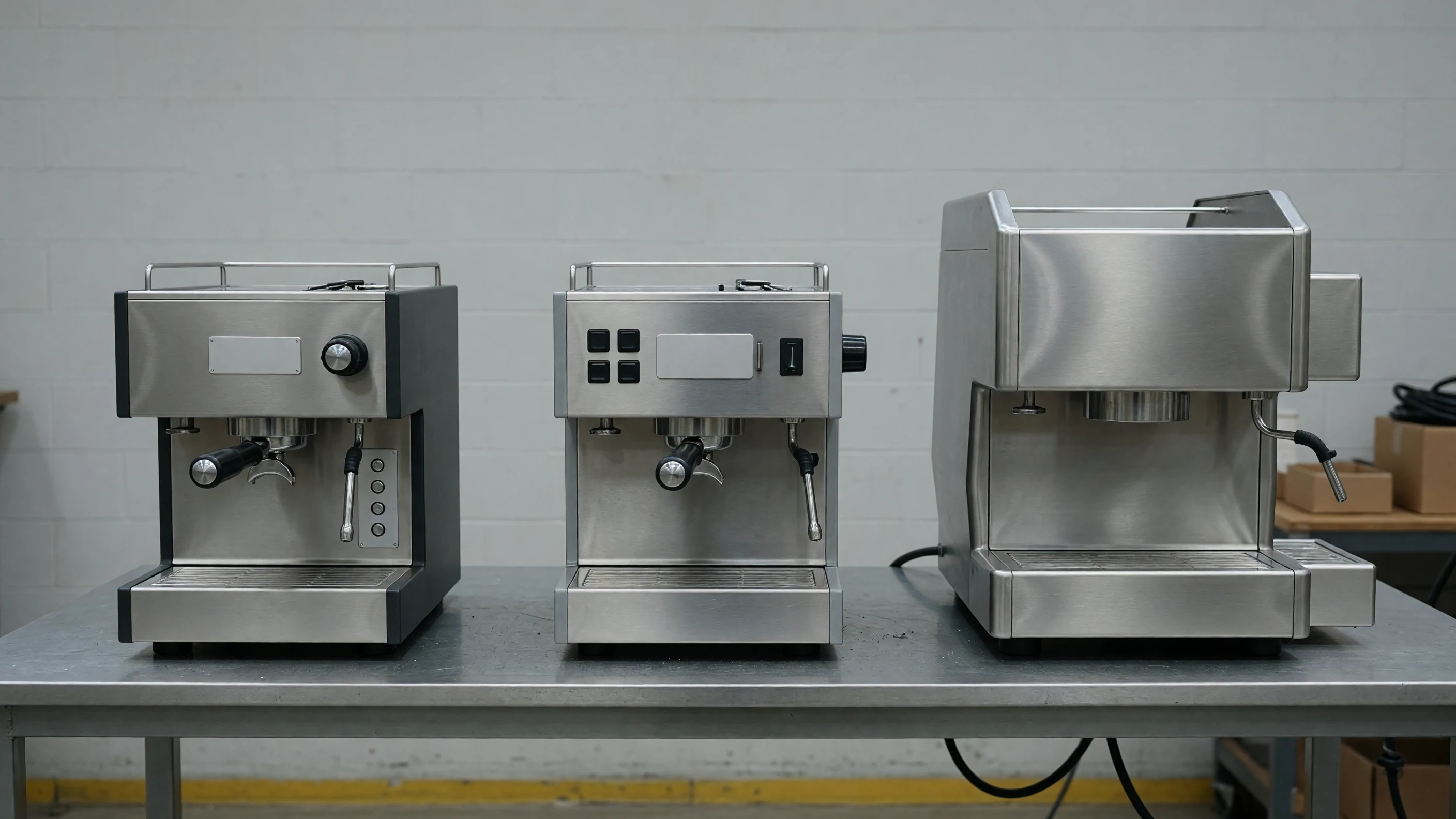
What to Lock Before Anyone Builds an OEM Coffee Machine Sample
We try to lock five items in one pass: target market, brand position, target buy price, the competitor the machine should sit next to, and a performance list. Two or three small revisions after that are normal. A long chain of revisions is a sign the brief was unclear.
At sample, the changes we actually see are color, panel, and function. Size almost never should change. A size change is a new product.
Quantity sits in the same brief. On our current buyer-facing terms, MOQ is normally 500 pieces per model. Some higher-value machines start around 300. If the first order cannot hit 500 on one model, two models can be combined, or the order can fill a 20-foot container, at roughly a 5% premium. One sample is charged up front at about 1.5 times the quoted unit price. That one unit's machine cost is deductible from the first order balance. Courier is on the buyer. Extra sample units are not all deducted. After the 30% deposit, production is about 45 days, about 30 days if the slot is urgent. Container counts for landed-cost planning are in our coffee machine wholesale MOQs and container counts.
Voltage belongs in the brief, not in a footnote after the sample. Catalogue machines are offered in 120 V / 60 Hz and 220–240 V / 50–60 Hz. Moving a CE machine into North America is a redevelopment of the PCB and the internal parts, then ETL. It is a different build, not a new plug on the same board. ETL is often two to four weeks and can run in parallel with the pilot once the certification fee is agreed. CE on a mature platform is the path we already run. Market-by-market marks are listed on our certifications for the destination market.
A First OEM Lot That Stayed on an Existing Platform
A brand buyer arrived the way many first orders do. They sell under their own name, they had a stainless reference photo, and they wanted the machine to look like their line. Their drinkers take a long cup, not a 30–60 ml double. They asked for their logo, a specified side-panel color, 120 V for North America, and a first lot around 500 pieces.
Those functions already exist on a current platform. On the professional-with-grinder line, a model such as CM 1629 is built for single and double shots, roughly 30–60 ml. For an Americano-style cup we change the panel wording and stretch the water time into about 150–350 ml. Grinder dose is the same kind of change. It sits in the panel program. Their reference width was already inside a housing we tool, so the sample stayed on that tool. Logo went through silk print. Color was sampled twice against their chip.
Two requests would have stopped that sample. Bolting a milk tank onto a classic boiler machine needs a new mould. Growing the group from 51 mm to 58 mm needs a new mould. Either one is a steel quote, not a one-week logo job. The 58 mm group is a wider, shallower basket with a shorter extraction path. It is a professional-tier platform, not a setting you turn on inside a 51 mm tool.
Pump choice is a separate line. The standard pump on these machines is a Jiayin pump. An Italian ULKA pump is about USD 2.5 more per unit, or the buyer moves to a platform that already uses ULKA, such as CM 1610. For this North American lot, the PCB and the internal parts were specified for 120 V, and ETL was booked once the certification fee was agreed.
The first lot in a project like this is a branded machine on our tool. Warranty is one year on core function — thermoblock, pump, and boiler-type assemblies — with parts and courier covered when the fault is manufacturing. We hold a defect band around 2–3%. If sell-through is healthy, a second project often shows up about six months later. That is a pattern we see. It is not a delivery promise, and it only happens when the first machine was the right platform.
Before anyone discusses a new housing, match a platform that is already tooled. The current map is 11 series and 112+ models, on our espresso machine platforms.
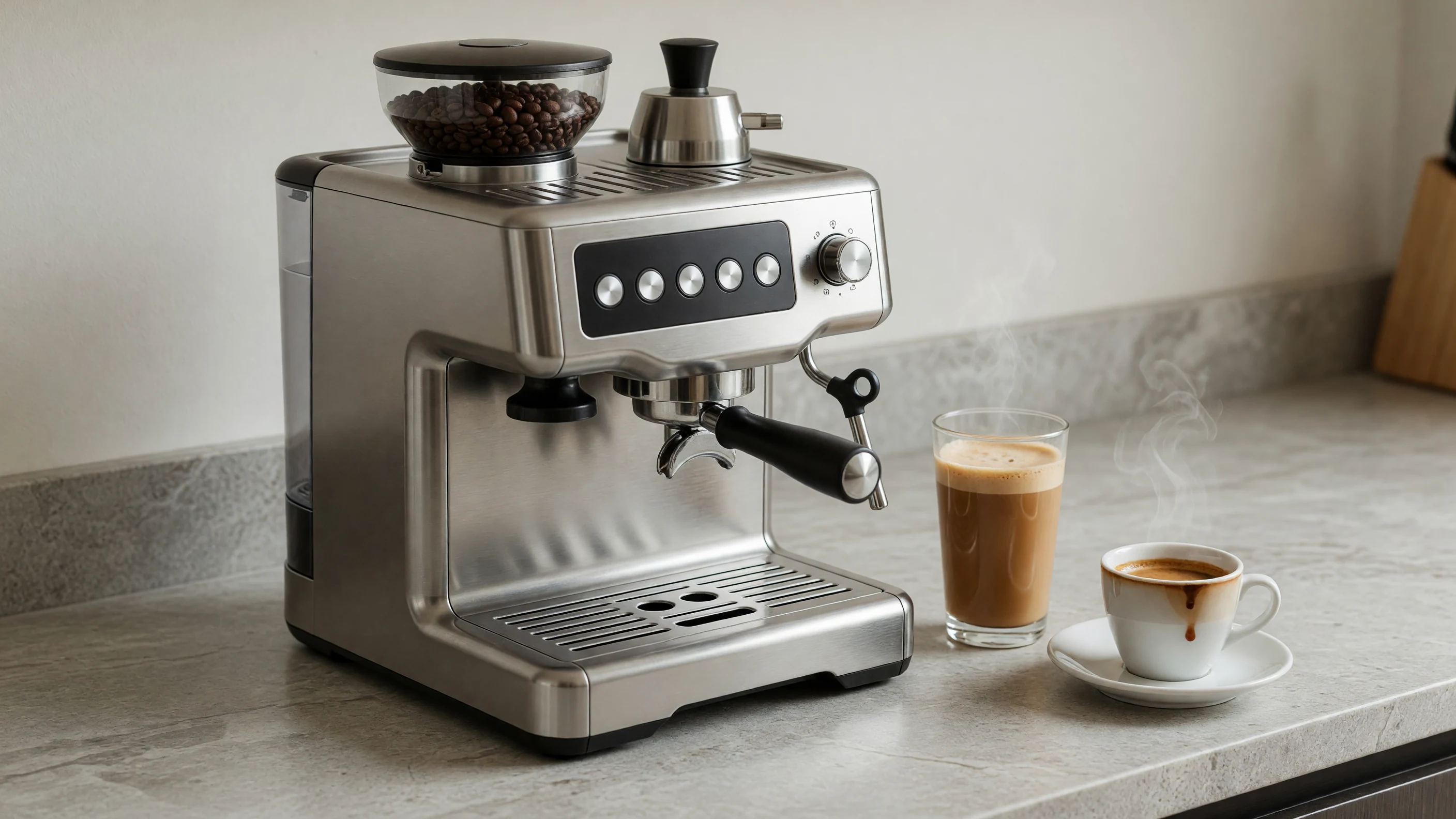
OEM Requests a Factory Should Turn Down
A concept photo with no brand or channel scale, no annual volume, no target price, and no drawing is a conversation. It is not an order to open a tool. We ask for those four items before we talk about steel.
We also refuse a copy of a machine we already build for another brand. CASABREWS is an Amazon top-3 brand supplied from this factory. When a new buyer asks for that same machine, the working answer is a different price band on a different platform. When we redirect that request, the bands we point to sit around USD 99–129, or around USD 139–159. A duplicate tool is not available.
App or Bluetooth remote control on a semi-automatic machine is a request this industry has already tested, including at the ODM group I worked in before Hardshell. Consumers did not adopt it. The buyers who still ask are usually small and hobby-driven. We do not list it as a capability.
Commercial batch-brew and drip vending are not on our development plan. A hotel group or a kitchen-equipment company that needs that class of machine should hear the limit in the first call. What we will take on, once the job is classified as branding, a panel program, or a real mould project, is set out on our OEM and ODM services page.
FAQ
What is an OEM coffee machine?
An OEM coffee machine is a machine built for your brand on a factory platform: your logo, color, carton, and, when the tool allows it, panel wording and pour settings. A new housing, a different group diameter, or a milk system the platform does not have is tooling, not a logo change.
How is an OEM coffee machine different from an ODM project?
Branding and small program changes use an existing tool. An ODM reshape — new appearance, a new mould, a new PCB — runs from spec confirm through mould build, tool trial, and pilot, typically 3–6 months. Much of the reshape work we actually do starts from a platform we already defined, rather than from a blank sheet.
How fast can an OEM coffee machine sample be ready?
About one week when there is no tooling change. About a month when the sample itself is customized. Color, panel, and function are the usual revisions, often settled in about two rounds.
What MOQ applies to a first OEM coffee machine order?
Normally 500 pieces per model. Some higher-value machines start around 300. Two models can be combined, or the order can fill a 20-foot container, at roughly a 5% premium, when a single model cannot hit 500.
Conclusion
An OEM coffee machine project holds its calendar when the photo is classified before the sample: logo and color, a panel program on the same tool, or new steel. Lock the market, the buy price, the competitor, and the performance list in that same pass, and match a platform that is already tooled.
If you have a target market, a buy price, and a reference platform, start an OEM coffee machine brief or send those three items to the factory.