
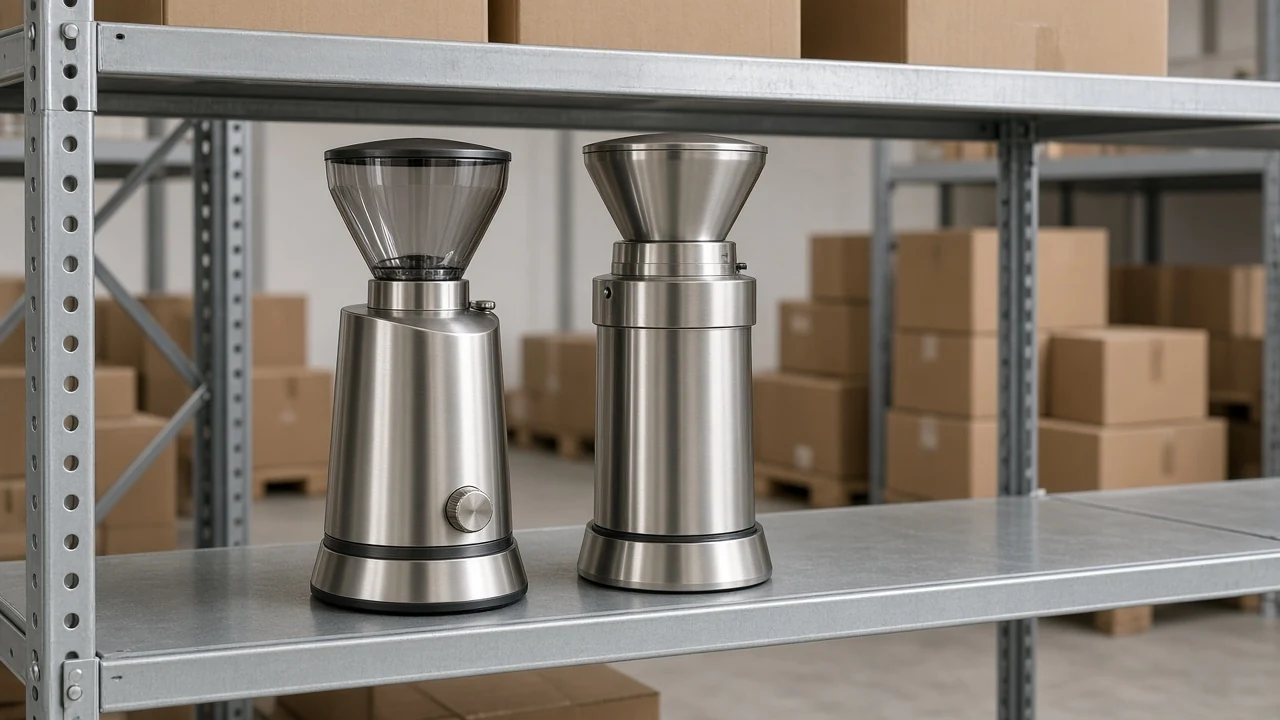
Coffee grinder wholesale is a different job from buying espresso machines. A grinder is a smaller product, but a shop or distributor that stocks one still has to answer three questions before ordering: which burr fits the customer, whether the grinder will perform in its market, and what the terms look like on a first order. This guide answers those questions from the factory side. I have spent more than 20 years on espresso machines and grinders. At Hardshell Technology in Foshan, we build our grinders in-house.
Quick Answer: Which Grinder Type Fits Which Market
Most wholesale grinder orders fall into three groups:
- Conical burr grinders suit home and prosumer shelves, and they pair well with matching espresso machines.
- 64 mm flat burr grinders suit 58 mm commercial and light-commercial counters.
- Portable grinders suit a separate outdoor and travel channel, and they sell to a different customer.
The right wholesale coffee grinder depends mainly on the buyer's channel. Next, check the three engineering points that most often decide whether a grinder performs in the field.
Conical Burr and Flat Burr Coffee Grinders: Choosing the Right Type
The burr should match the machine and the customer. Price is a poor first filter.
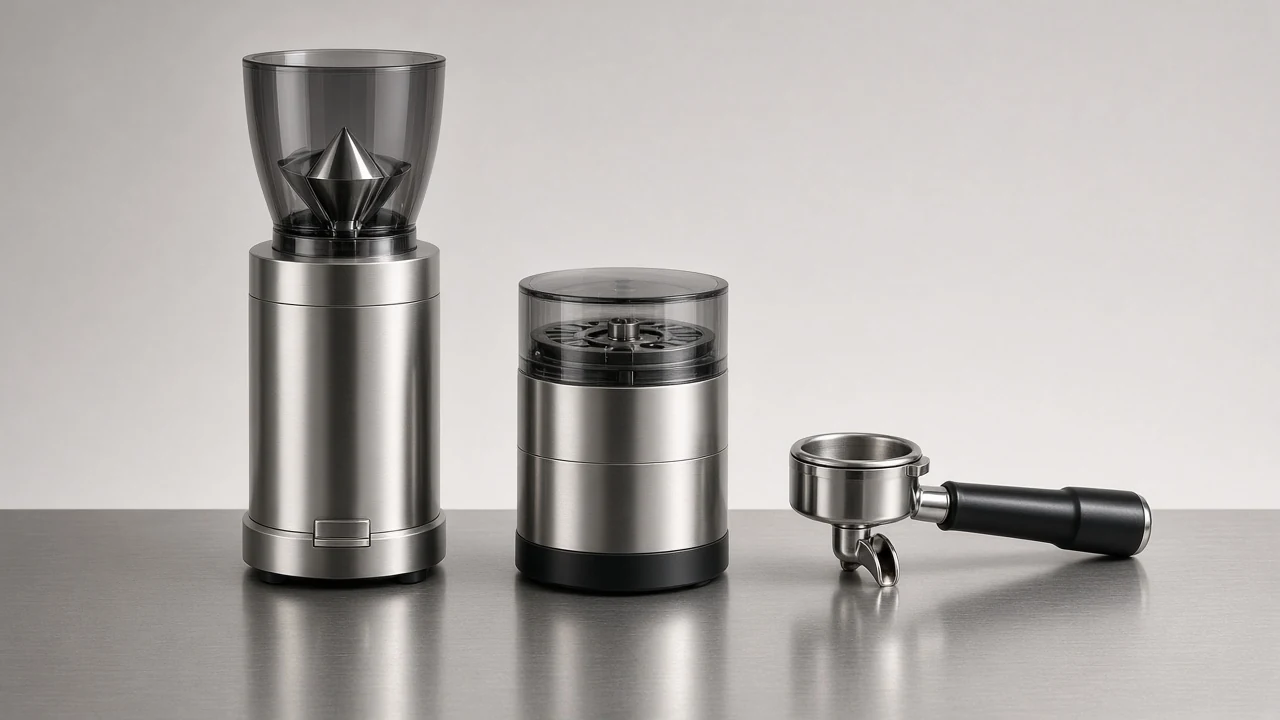
Our conical burr grinders, the CG 2101 through CG 2109 series, use a 150 W DC motor, a 250 g removable bean container, and a 75 g powder box, with a grinding speed of 450 rpm. They cover grind settings from espresso to French press. They suit home users and prosumers who want a grinder for a single-dose espresso routine.
Our flat-burr model, the CG 2107, uses a 64 mm stainless steel flat burr with 100 grind settings and grind timing adjustable in 0.5-second steps. It includes a portafilter holder for both 51 mm and 58 mm portafilters. Flat burrs suit a 58 mm basket, which needs a steady, uniform grind every day. Most of our flat-burr grinders go to commercial and light-commercial buyers.
The portable CG 2100 has a 30 g bean container, an 800 mAh battery, a Type-C charging port, and 16 grind settings. It suits camping, travel, and office use, so a distributor should treat it as a separate channel.
| Grinder type | Example model | Best-fit channel | Key specs | Less suitable for |
|---|---|---|---|---|
| Conical burr | CG 2101 to CG 2109 | Home and prosumer shelves, matching espresso machines | 150 W DC motor, 250 g bean container, 450 rpm | Shallow 58 mm commercial baskets that need a flat-burr grind |
| Flat burr (64 mm) | CG 2107 | 58 mm commercial and light-commercial counters | 100 grind steps, 0.5 s timing, 51 mm and 58 mm holder | Buyers who want a compact home unit |
| Portable | CG 2100 | Outdoor, travel, and office | 30 g bean container, 800 mAh, Type-C, 16 steps | Counter-based café or commercial use |
Container loading figures are published for some conical models and not yet for others. Check the current loading data for each model before you plan a container.
The Three Grinder Problems to Check Before You Buy
Grinder problems rarely start at the burr. They usually start in the powder path, the static, or the grind setting over time.
Powder path clogging in humid markets. The most common complaint in spring is blockage. Humid air makes beans take on moisture and the oils begin to smear, and fine powder clumps inside the chute until the grinder stops delivering. We designed a dedicated powder outlet so the powder falls straight out instead of sitting in a bend. We also test with humidified beans and set up harsh blockage conditions on purpose, because a bench test with fresh, dry beans will not show the problem. Ask any supplier how their anti-clog test is run.
Static and flying powder. Freshly ground coffee carries a charge, so it jumps out of the portafilter and coats the counter. Our conical grinders use a negative-ion anti-static module. The flat-burr CG 2107 uses a plasma anti-static design. The result for your customer is simple: the coffee lands in the basket and stays off the bench.
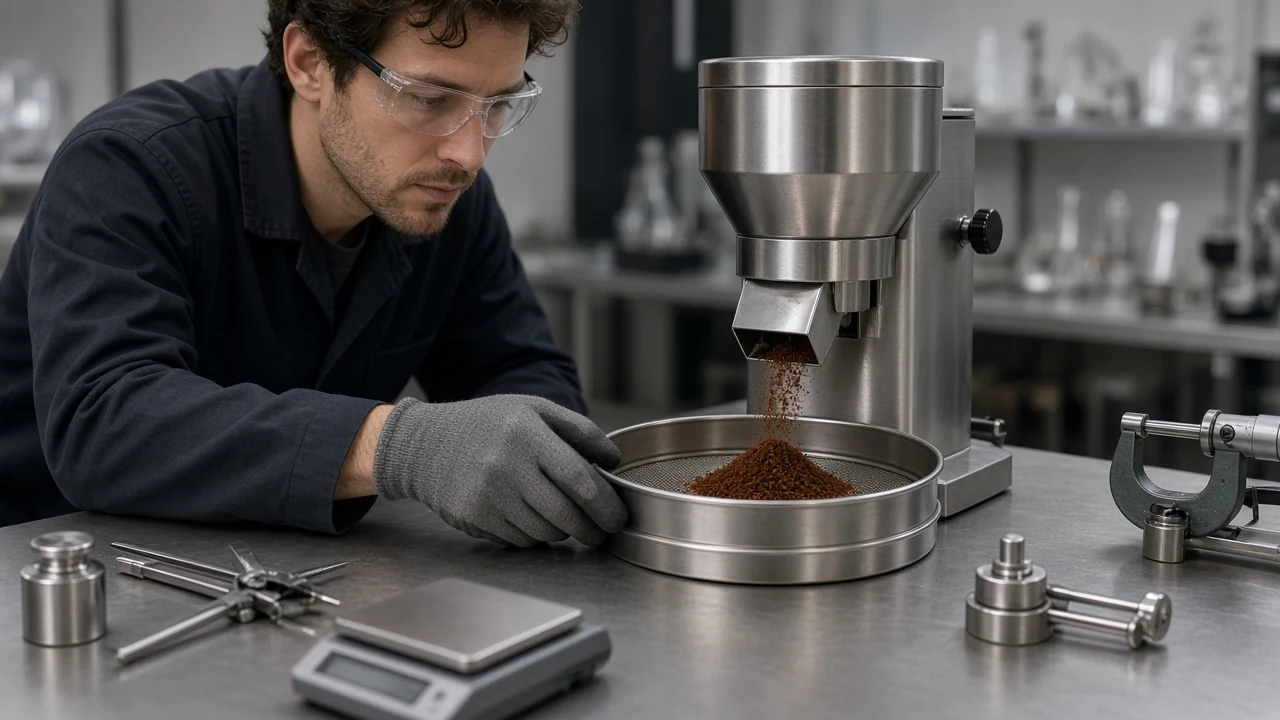
Grind drift over time. Some grinders drift coarser after about six months of use, which changes every cup a café pulls. We check burr wear with a standard particle-size test. We grind a fixed dose at set intervals, sieve the powder, and compare the distribution against the first reading, so any drift shows up in numbers. Our design target is to hold the setting within a small tolerance for more than one year of normal use. Treat it as a design target, and ask for the test data behind it, since that figure matters most to a careful buyer.
Market tuning. Every market wants a slightly different grind. In our experience, American customers usually prefer a slightly coarser setting, while many customers in other markets want it finer. We set the burr for the target market before the grinder ships, and then check the result against our own standard. When you place an order, name the market and the grind setting you need.
Coffee Grinder Wholesale Terms: MOQ, Mixed Orders, Samples, and Lead Time
Wholesale terms are where first orders go wrong, so agree on them in writing before the deposit. Start with the coffee grinder MOQ, because it decides how you can split a first order.
Minimum order quantity. Our standard MOQ is 500 pieces per model number. For high-value models, it can be 300.
Mixed orders. If a first order cannot reach 500 units of one model, a buyer can mix models to reach the MOQ or fill one 20-foot container. Mixed orders carry a price increase of about 5%. For example, a buyer might take 200 to 300 units each of two or three similar models.
Samples. A sample is charged at about 1.5 times the quoted price. That amount is deducted from the balance of the first full order. Only one sample is covered this way.
Lead time and payment. Standard lead time is about 45 days, and an urgent order can be made in about 30 days. On FOB terms, the usual payment is a 30% deposit by T/T, with the remaining 70% paid against the bill of lading, or before loading if the buyer arranges the forwarder. Confirm the exact dates on your own order.
Warranty. We offer a one-year limited warranty on manufacturing and quality defects. Our target is to keep the overall defect and return rate within 2% to 3%. Ask us to confirm the covered parts for the specific grinder model you order, so both sides know what is included before the first shipment.
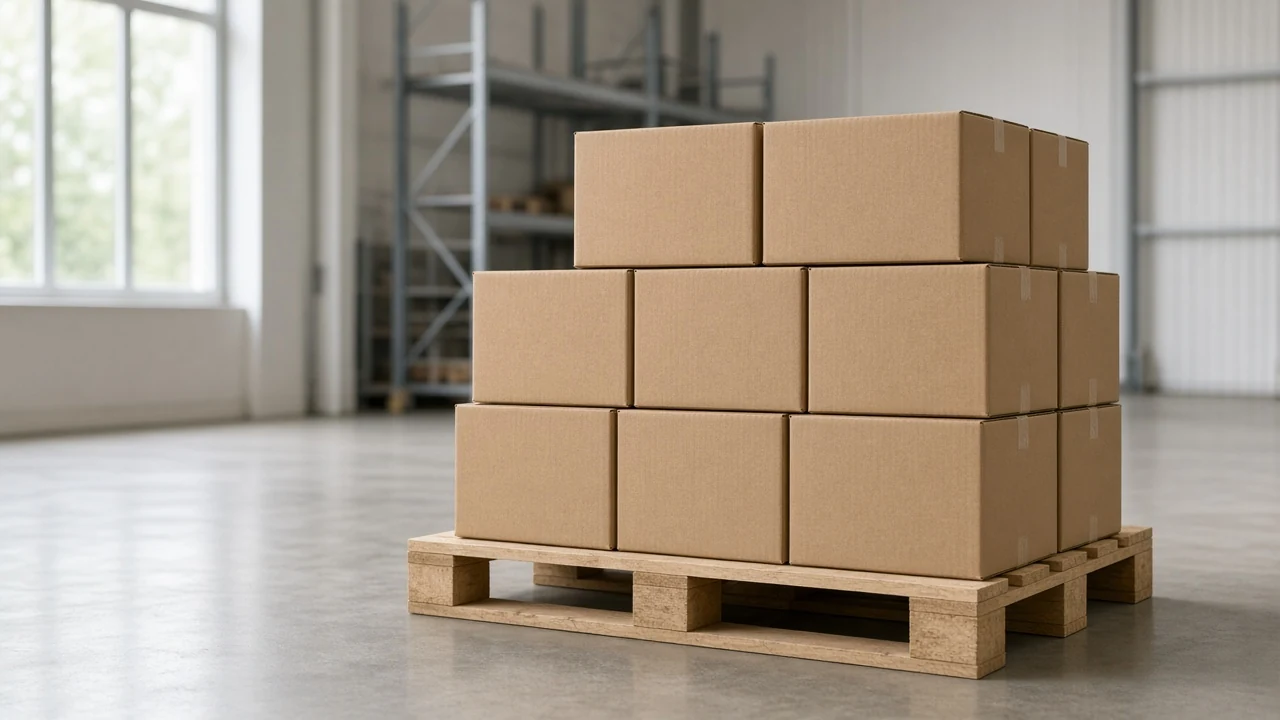
Our CEO's view is that a first order goes well when the rules are explained before the first shipment, so the buyer knows exactly what they are committing to.
Related reading: how to place an OEM grinder wholesale order covers private-label orders, which work differently from buying our standard models for resale.
A Pre-Order Checklist for Grinder Buyers
Run these five checks before you pay a deposit.
- Name the market and the grind setting first, then pick the model.
- Confirm voltage and certification. Our products carry CE, CB, ERP, LFGB, RoHS, and REACH approvals. Our grinders also carry UL and ETL certification, which matters for buyers selling into North America. Read the full list on the certifications page.
- Plan the mix if one model does not reach the MOQ.
- Order one sample and test it with your own beans and water before you commit to the full order.
- Agree on the warranty and the covered parts for the grinder, in writing.
For a broader view of how we check suppliers and quality, see how to choose a reliable coffee grinder supplier. Our quality page explains the five quality gates each grinder passes through, from supplier checks to final inspection.
FAQ
What is the minimum order for coffee grinder wholesale?
Our standard MOQ is 500 pieces per model, and some high-value models can be 300. A buyer can mix models to reach the MOQ or fill a 20-foot container.
Which grinder type should a distributor stock first?
It depends on the channel. Conical burr grinders suit home and prosumer shelves. The 64 mm flat burr CG 2107 suits 58 mm commercial counters. Portable grinders suit a separate outdoor channel.
Can the grind be adjusted for my market?
Yes. We set the burr for the target market before shipping. Name the market and the grind you need when you place the order.
How long does a wholesale grinder order take?
Standard lead time is about 45 days, and an urgent order can be made in about 30 days. Confirm the dates on your order, because the schedule depends on the models and quantities.
Conclusion
Coffee grinder wholesale works best when the buyer matches the grinder type to the channel, checks the design and the terms before the first order, and tests a sample on their own beans. Start by naming your market and your channel. Then talk to our team about the right model, the mix, and the sample plan. You can browse the coffee grinder range or talk to our OEM and ODM team about volume and samples to start.