
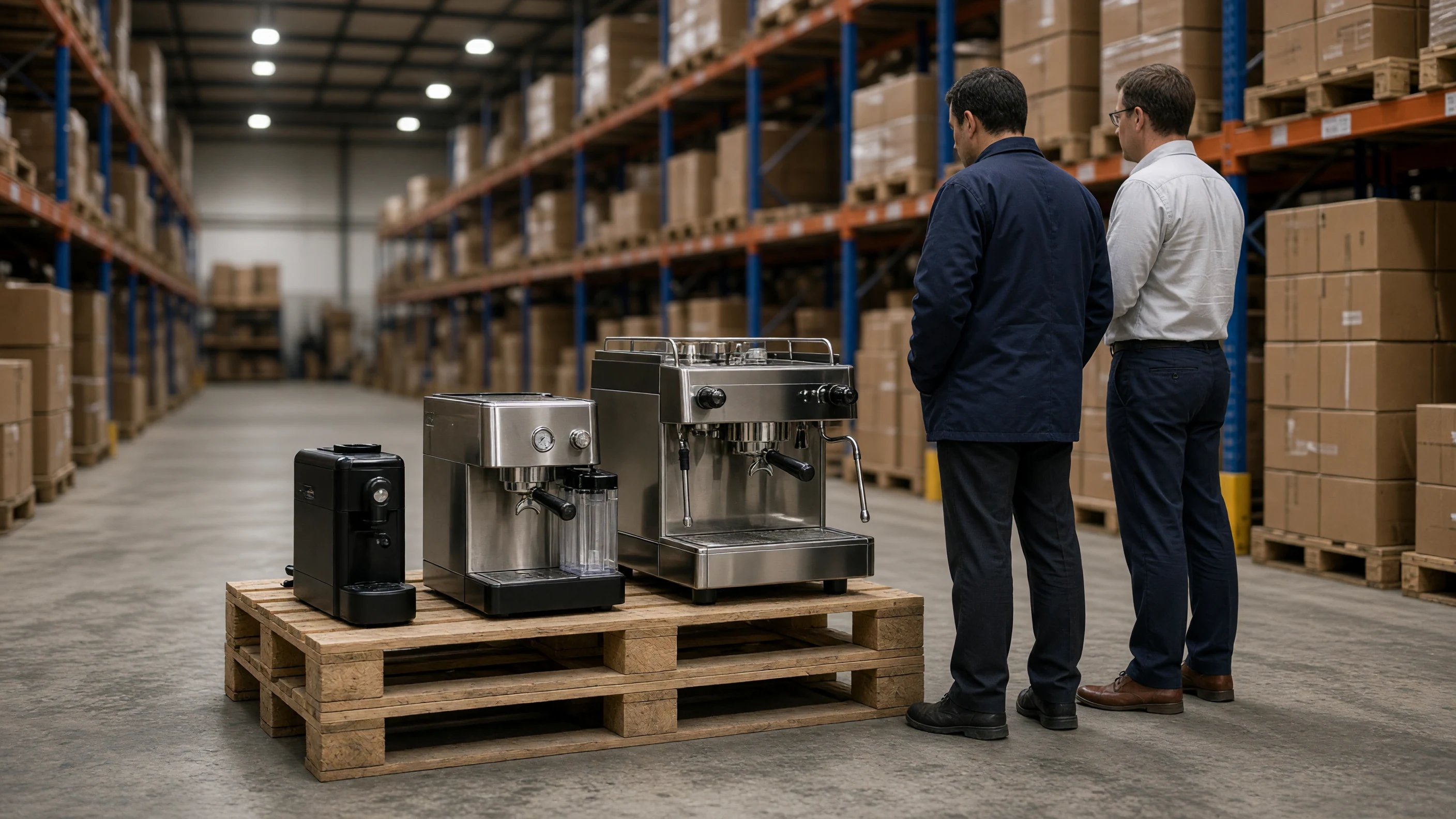
An espresso machine distributor is only as useful as the match between the machine and the door. A guest-room project, a café at peak hour, and a retail shelf that sells milk drinks are three different machines. One SKU across all three is how the second container comes back with the line “this does not make espresso,” even when every unit passed the factory bench. Name the doors first. Then check the portafilter, the milk system, the pump mark on the panel, the spare-parts script, and whether one container can hold the mix.
I have spent more than 20 years on espresso-machine tooling and production, first inside a large Guangdong ODM group, now at Hardshell Technology in Foshan. We build the machines. We do not appoint dealers. Channel and equipment houses are about 30% of the accounts we ship, next to brands and ecommerce sellers. If you are choosing an espresso machine distributor, or you are that distributor assembling a line, the checks below are the ones that keep later containers from turning into returns.
Why One Espresso Model Fails Three Doors
The expensive call is the one that says the machine does not make espresso. It usually lands after the second container, when the first has already sold and the shop relationship is what is actually at risk. The units on that call had passed our bench.
The mismatch was the rung. The buyer had filled the container with our Classic band — an aluminum storage boiler, about 950 W — because the FOB left margin. That band still has a real door: European and Russian discount retail, a household waiting for a sale, a basic cup. It is the wrong volume SKU once the market drinks milk. A Middle East or Russian shelf reads a larger body as a more expensive machine and expects a 20 bar mark on the panel. A US counter wants stainless. Next to a 1350 W thermoblock, that 950 W boiler is slower to the cup and less steady on steam. The difference is the wattage.
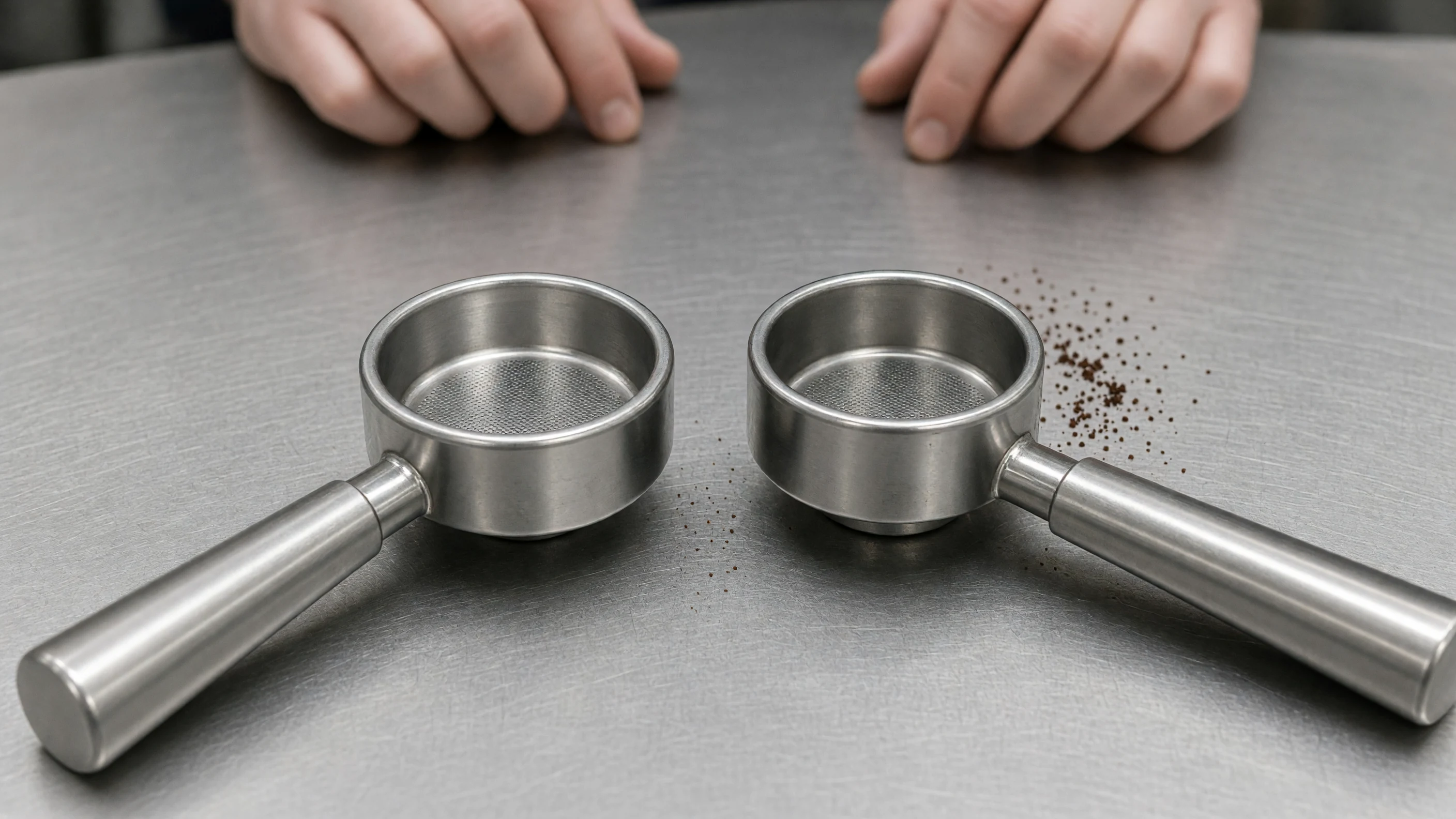
Crema tickets on the same lot usually start at the group. Coffee left on the seal stops the portafilter from seating, and the shot runs out around the rim. A 58 mm single-wall basket makes the same complaint mean something else. The basket is wider and shallower, the path is shorter, and the coffee bed is what holds pressure. We treat that band as about 9 to 18 bar. It wants a finer, more even dose than a 51 mm basket. Staff who learned the entry machine will reject the pro machine for doing what the basket requires.
The shelf has a separate problem. We keep many panels on one brewing platform so two accounts in one city are not stuck with the same fascia. Channel buyers ask three things first: quality, whether we can match the brief, and exclusive distribution. Exclusive distribution is negotiated. It is absent from the first quotation. An order that only says “logo” puts a twin across town.
If you are still weighing brand resale, a trading company, or a factory-direct line, that choice is a different article: how coffee machine distributors pick a sourcing model. What follows assumes you already need espresso, and you need each door to get the right one.
Match the Espresso Machine to the Door You Actually Supply
Name the door, then open the espresso machine range. The table is a fit guide. It is not a ranking, and it is not one winner for every buyer.
| Door | What belongs there | Leave off this door |
|---|---|---|
| Hotel guest room | A simple, low-skill machine. When the brief is one unit per room, our 4-in-1 capsule platform takes Nespresso, Dolce Gusto, ESE pods, and ground coffee. | A 58 mm pro group, a steam wand the night staff must learn, or the commercial CM 1678. In-room staff will not dose and tamp. |
| Hotel restaurant, café, bakery counter | A time the owner can check. On a semi-auto we have filmed an Americano and a cappuccino at about two to three minutes each. When brew and steam run as one service, the platform is CM 1678: two pumps, three boilers, about 2950 W, 220–240 V, a 58 mm group. Peak hour scales by adding a second unit. | A single 950 W entry boiler as the only café machine. |
| Retail shelf and pro-home | Wide auto-milk where a larger body reads as expensive: the CM 1833 class, double instant thermoblock, 1350 W, a 20 bar mark, one button for espresso, cappuccino, and latte. Slim stainless with a single thermoblock where the kitchen is small, which is the usual US pattern. The pro-home rung is the CM 1610 family: ULKA pump, dual thermal block, 58 mm single-wall horn portafilter, flow meter, its own hot-water outlet, grinder on board. | A panel that treats 20 bar as the pressure in the cup. Middle East and Russia shelves want the mark. The home cup versus a 15 bar pump is small. |
| Discount retail, price-first household | Classic, about 950 W, aluminum boiler. | That same machine as the hero SKU in a milk-drink market. |
A second thermoblock — one path for brew, one for steam — adds about USD 6–10 on the cost sheet. That is the home dual boiler architecture. It is a different machine from CM 1678, and a different machine from a pair of large café storage boilers.
Grind follows the group. A conical burr covers ordinary home espresso. A 64 mm flat burr belongs with a 58 mm user who is serious about the dose. Machines that already carry a grinder are covered in espresso machines with a built-in grinder.
A long cup is a program change on a platform we already ship. A double shot leaves the group at about 30–60 ml. An Americano brief at 150–350 ml, the cup a lot of café accounts actually pour, means a panel word, a longer water-out, and the grinder dose per shot set in the same program. We have done that on CM 1629. It takes days. It does not need a new mould.
Keep the guest room and the hotel restaurant on separate rows. They can share a supplier. They should keep separate SKUs.
What to Verify Before You Appoint an Espresso Machine Distributor
Run these five checks before anyone pays a deposit.
1. Doors and voltage before the model number. Middle East and Russia sit on 220–240 V. A US counter needs the 120 V book, plus ETL or UL. CE alone does not open North America. Confirm the certificate on the exact model and the exact destination. The map we walk through with buyers is on the market certifications page.
2. The line, not a logo on one box. Ask which platform is entry, which is milk, and which is 58 mm. Changing a 51 mm group to 58 mm, or adding a milk tank to a housing that has none, means new steel. Logo, color, and panel words stay on the current tool.
3. The service script. Milk left in the tube, the wand opened before the ready light, and grounds on the brew-head seal are the three tickets we train a distributor’s desk to clear first. Those sit outside the warranty parts list. The thermoblock, the pump, and the boiler sit inside it, for one year, with the part and the courier included, inside a defect band we hold around 2–3%.
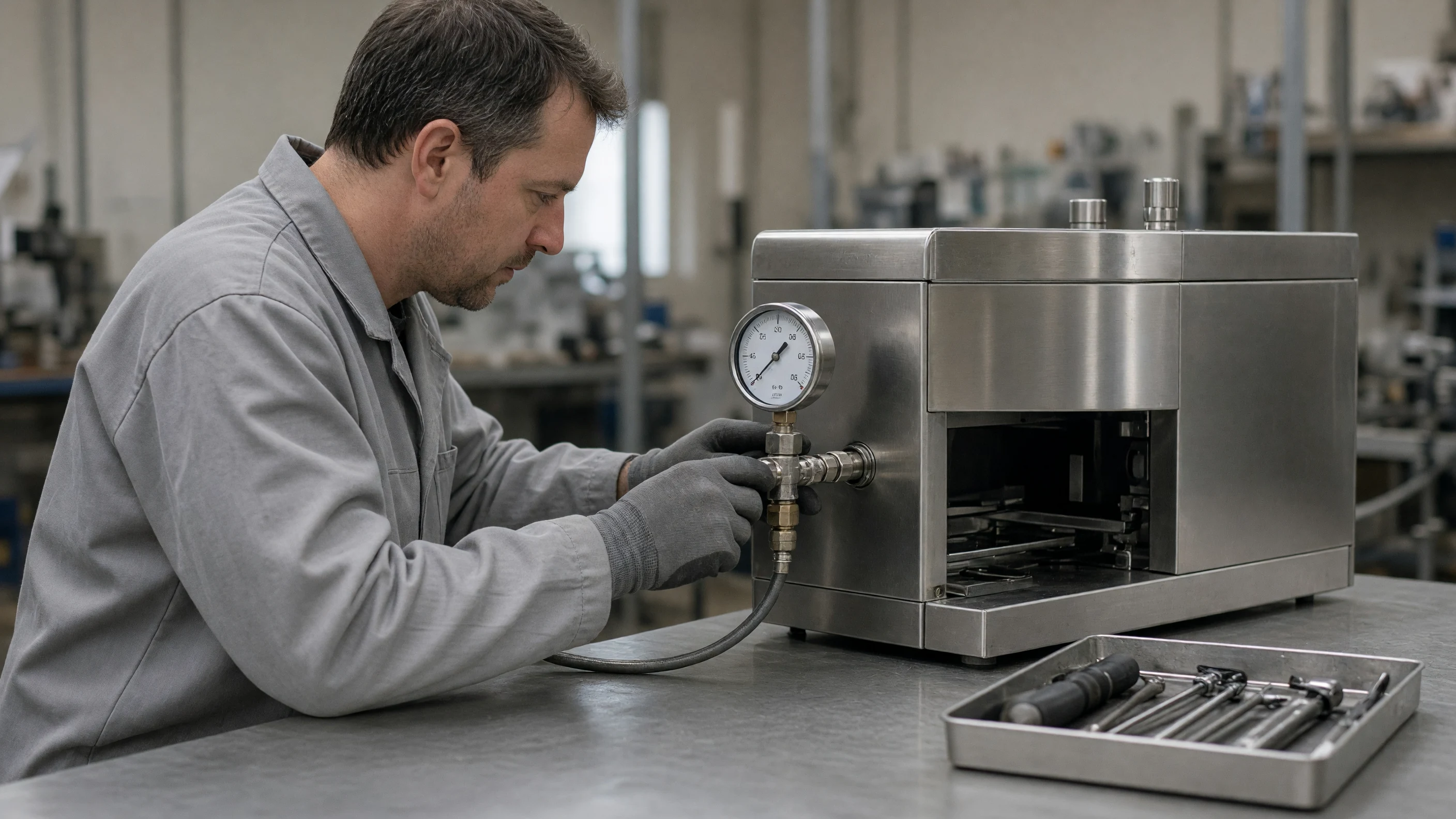
4. Incoming inspection on the parts that drift. Pump, valve, seal, and thermoblock are fully inspected as they arrive. A seal can pass a caliper and still tire after heat cycles. Behind that sit five gates — SQE, IQC, PQC, QA, FQC — written up on the quality page. When process inspection is where the defects pile up, the line is already late. We want those parts stopped at incoming.
5. One mixed container, on the MOQ we actually quote. New buyers hear 500 pieces per model, and 300 on some high-value machines. A first order that cannot hit 500 of one model can mix models until it reaches 500 or one 20-foot container, at about 5% more on the price. CM 1610 loads about 320 pieces in a 20GP. A wide auto-milk loads closer to 780. Putting CM 1678 on a 500-piece first channel order is the wrong plan. One sample is about 1.5 times the quoted unit price, paid up front and credited on the first order. The courier stays with the buyer. Production after the 30% deposit runs about 45 days, then about a week of final QC and a week to book the container. More of the container arithmetic is in espresso machine wholesale.
One Container for More Than One Door
A hospitality-equipment house arrived the way a lot of this work does. They already supplied cafés, restaurants, and a retail counter. They wanted one factory, their own mark, 220–240 V, black or stainless, plus exclusive territory and the lowest FOB in the same email. The mix below is a representative pattern from that kind of brief, not a named account.
One model could not cover the doors. Retail stayed on the wide auto-milk platform. Pro-home took the CM 1610 family. The café took CM 1678, with the two-to-three-minute drinks filmed so a restaurant owner could see a clock.
Color was about USD 5 a machine, silk-print logo, two sample rounds. Jiayin is the standard pump. ULKA is about USD 2.5 more when the platform does not already carry it. Exclusive territory stayed off the first order. That conversation opens after the containers sell, and only for a defined market. We left the cheapest quote alone. The account holds when the shops stop sending machines back. In a market like that, a healthy reorder rhythm is about two or three times a year.
Conclusion
Choose an espresso machine distributor by naming the door, then the machine, then the container. A guest room, a café rush, and a retail milk shelf will not live on one FOB number. A buyer who wants the cheapest single SKU for every door is a poor fit for this line.
When the doors are clear, talk to our OEM/ODM team or book a live factory walk-through.
FAQ
What does an espresso machine distributor need to stock for hotels and cafés?
Guest rooms and the restaurant are different machines. A capsule unit, or another low-skill machine, fits the room. A timed semi-auto fits the café rush. CM 1678 fits when brew and steam have to run as one service.
Is a 20 bar espresso machine better than 15 bar?
The home cup is close to the same. Middle East and Russia shelves often want the 20 bar mark printed. Read that mark as a shelf preference. The cup is not brewed at 20 bar.
Can one container hold more than one espresso model?
Yes. When one model cannot hit the minimum, mix toward 500 pieces or one 20-foot container. On the quote we give new buyers, that mix is about 5% more.
Does the factory appoint exclusive espresso machine distributors?
Exclusive territory is not a standard term. Panel, color, and logo are how neighboring accounts avoid the same fascia. Territory comes later, after the market and the volume are defined.